

Recapping the Market in 2017
The story for the market in 2017 was one where sales were down but price and number of listings were up.
Punctuated by Ipsos consumer survey results, this first section of the report will help us understand how the market shaped up in 2017, including a detailed look at the impact of the Ontario Fair Housing Plan (FHP) and new stricter mortgage guidelines introduced by the Office of the Superintendent of Financial Institutions (OSFI).
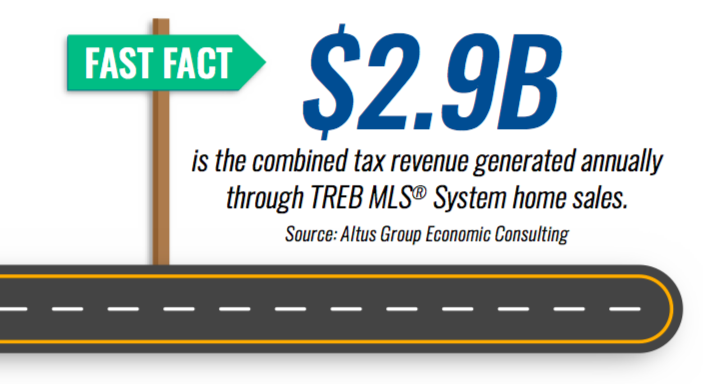
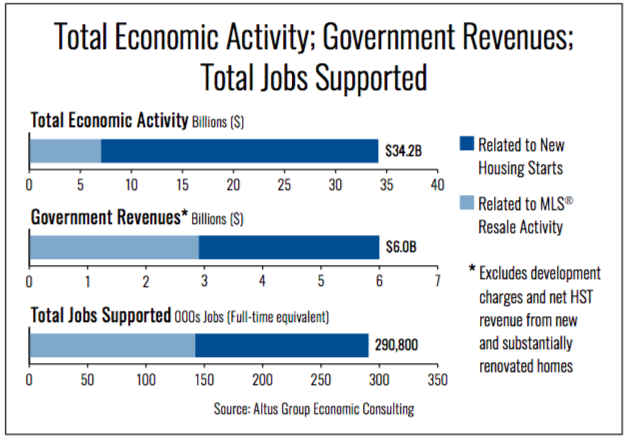
• The average annual spin-o expenditure generated by home sales through TREB’s MLS® System be- tween 2014 and 2016 amounted to approximately $7 billion. These expenditures helped create and sup- port over 142,000 jobs.
New housing construction,which often starts with a GTA REALTOR® bringing their client to a sales centre, resulted in an annual economic impact of $27.2 billion associated with almost 150,000 jobs. Underlying these jobs was more than $27 billion in economic activity annually.
Housing is a critically important industry in the Greater Toronto Area (GTA). Buying and selling existing homes and building new ones all contribute to the housing stock, providing homes for the growing number of persons and families that choose to live in this region. These activities are also critical for creating and supporting a wide array of jobs, not only directly related to housing, but across virtually all sectors of the economy.
New research by Altus Group illustrates the broad eco- nomic impact of the housing sector in the GTA. Speci - cally, this report examines three major impacts that the housing industry has on the prosperity of the GTA:
• Spin-o expendituresandjobsassociatedwithTREB MLS® System home sales;
• Governmentrevenuesaccruingdirectlyandindirectly from TREB MLS® System home sales;
• The economic impacts associated with new home construction.
• The average annual spin-o expenditure generated by home sales through TREB’s MLS® System be- tween 2014 and 2016 amounted to approximately $7 billion. These expenditures helped create and sup- port over 142,000 jobs.
MARKET YEAR IN REVIEW: The Market in 2017
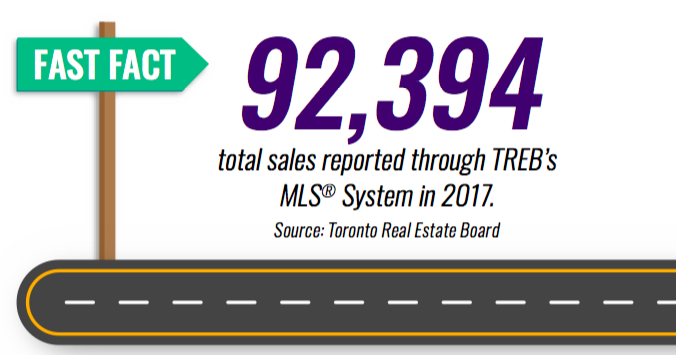
Total sales reported through TREB’s MLS® System in 2017 amounted to 92,394 - down by 18.3 per cent compared to the record set in 2016.
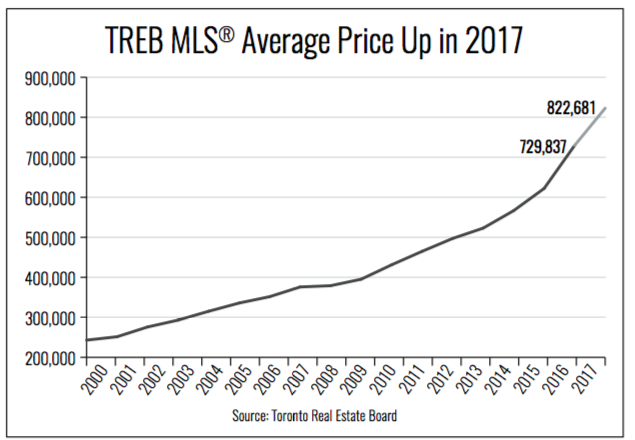
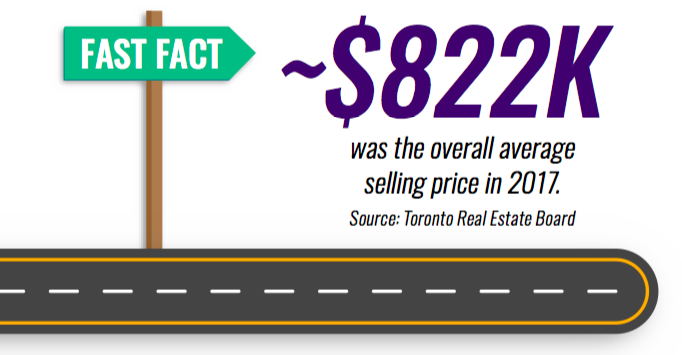
The overall average selling price of $822,681 was up 12.7 per cent compared to 2016. Both average price and MLS® Home Price Index (HPI) annual growth rates were strongest in Q1 2017.
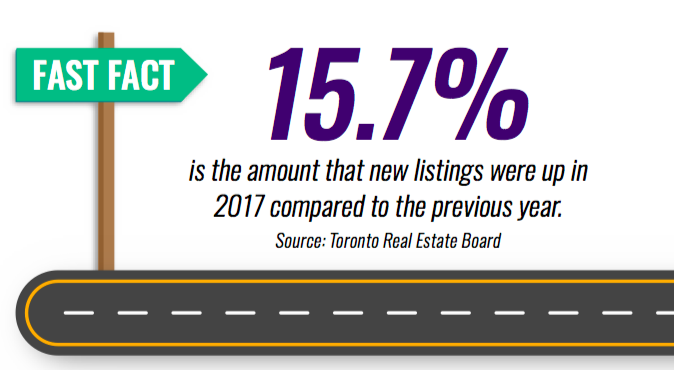
The pace of year-over-year price growth receded during the last two-thirds of 2017, as listings in- creased relative to sales. Total new listings entered into TREB’s MLS® System amounted to 178,489 – up 15.7 per cent compared to 2016.
While the announcement of the Ontario Fair Housing Plan (FHP), including a tax on foreign buyers, was the main impetus for the change in market conditions in the spring and summer of 2017, the e ect was more psychological. Multiple sources have con rmed that foreign buying activity was very low prior to the FHP and remained low afterward.
Demand for ownership housing strengthened in Q4 2017, perhaps indicating the waning effects of the FHP, and perhaps due to new, stricter mortgage lending guidelines announced for 2018, prompting home purchases earlier than they otherwise would have taken place.
MARKET OUTLOOK: Looking Ahead to 2018
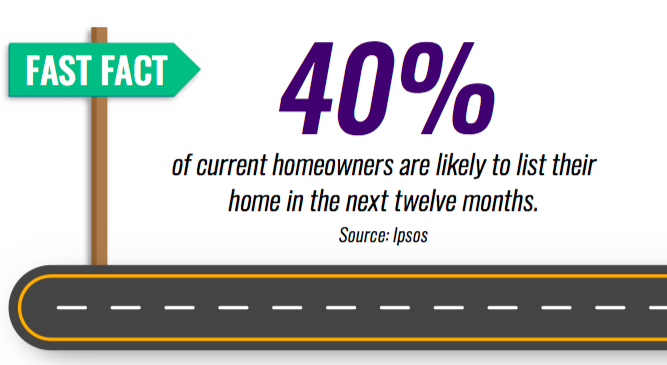
26 per cent of respondents in the November 2017 Ipsos Home Buyers Survey indicated that they were very likely or somewhat likely to purchase a home in the following 12 months.
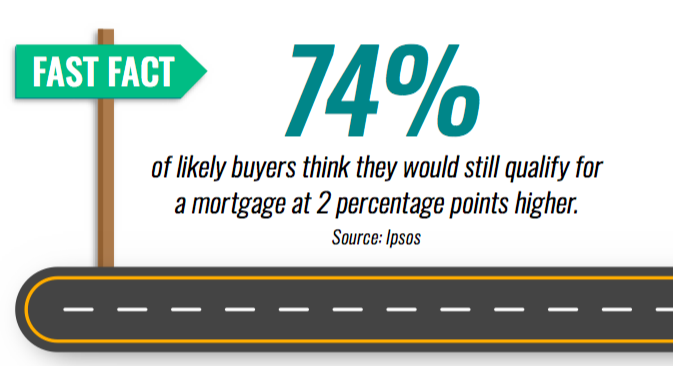
Approximately one quarter of respondents felt that they would not qualify for a mortgage on their chosen home if their qualifying rate increased by two per- centage points.
Outlook for Home Sales and Prices
There will be factors in 2018 that promote the demand for ownership housing and others that act as a drag on demand. Strong local economic conditions, including income growth above the rate of in- ation, coupled with an increased immigration target will result in sustained household growth in the GTA, both in 2018 and over the longer-term. However, in the next 12 months, demand will be stunted by the impact of govern- ment policy decisions and higher borrowing costs.
We will start 2018 with both the FHP and the new OSFI stress test regulations weighing on home sales reported through TREB’s MLS® System. Similar to the Greater Vancouver experience, however, we will start to see the psychological impact of the FHP, particularly the tax on foreign buyers, wane.
The forecast range for sales reported through TREB’s MLS® System in 2018 will be between 85,000 and 95,000 transactions.
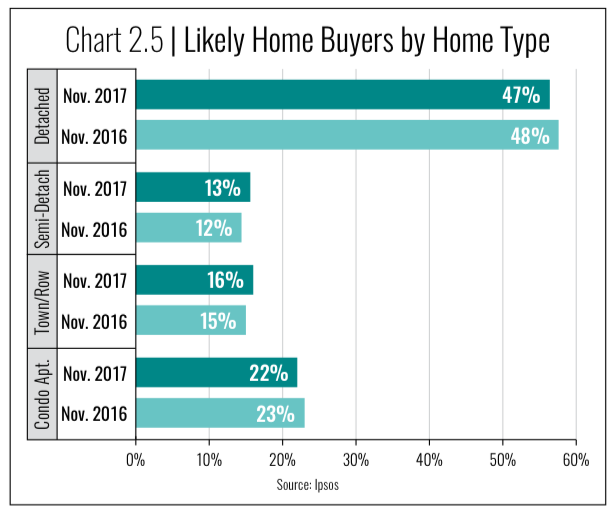
The most popular home type people plan to purchase in 2018 is a detached home, representing 47 per cent of buying intentions. Detached buying intentions are higher in the GTA regions surrounding Toronto (54 per cent) versus the City of Toronto itself (39 per cent). Condo apartments are the second most com- mon home type likely buyers intend to purchase, at 22 per cent for the GTA and 27 per cent in the City of Toronto. Condominium apartment buying intentions are lower in the GTA regions surrounding Toronto, at 18 per cent.
The forecast range for the overall average selling price will be between $800,000 and $850,000, pointing towards a attening of the price trend in 2018.
Focus on Mortgage Rates and New Qualifcation Guidelines
The majority of home buyers purchase their home through the use of a mortgage. This was con rmed by the Ipsos Home Buyers Survey, which found that 74 per cent of intending home buyers in 2018 will use a mortgage.
Given that the majority of intending buyers will use a mortgage, the cost of borrowing is very important from an a ordability perspective. Mortgage rates increased markedly in the second half of 2017 as the Bank of Canada increased its Target for the Overnight Lending Rate. Forward rates for Government of Canada bond yields point to gradual rate increases continuing over the next year as well.
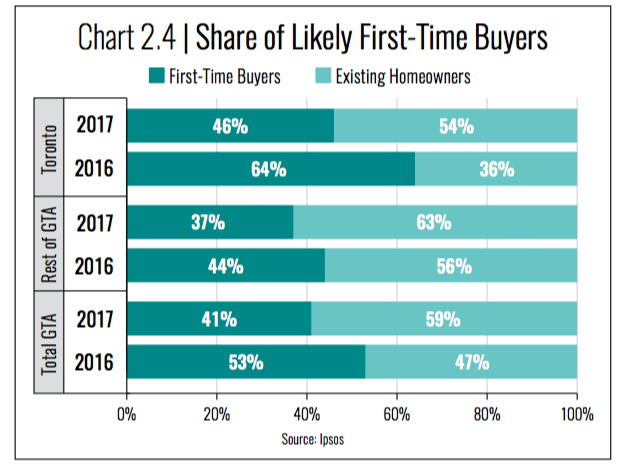
The 2017 Ipsos survey found that 26 per cent of intend- ing home buyers would have di culty qualifying for a mortgage on their preferred home. Not surprisingly, the share was higher for intending rst-time buyers (29 per cent) compared to existing homeowners (23 per cent), likely because most rst-time buyers may not have as much exibility with regard to the down payment amount and/or the amount of income that can be dedicated to mortgage payments.
Continued rent growth well-above the rate of inflation is expected for 2018 due to dwindling supply and newly-introduced rent control legislation.
To get a full Market Report, please contact us at [email protected]
Source: TREB